VAUGHAN, FREDERICK SALMON
1886-1963 from England
Dean of Christ Church Cathedral, was born in Camden, London on 21 January 1886. He was ordained priest in Cumberland in 1912 and his first parish was Workington, where he served as assistant curate from 1912 to 1916. Vaughan then served as vicar of two country parishes in the Lake District 1916 to1920. He served as an army chaplain in World War I before becoming Vicar of St Mary, Walney Island from 1920 to 1926.
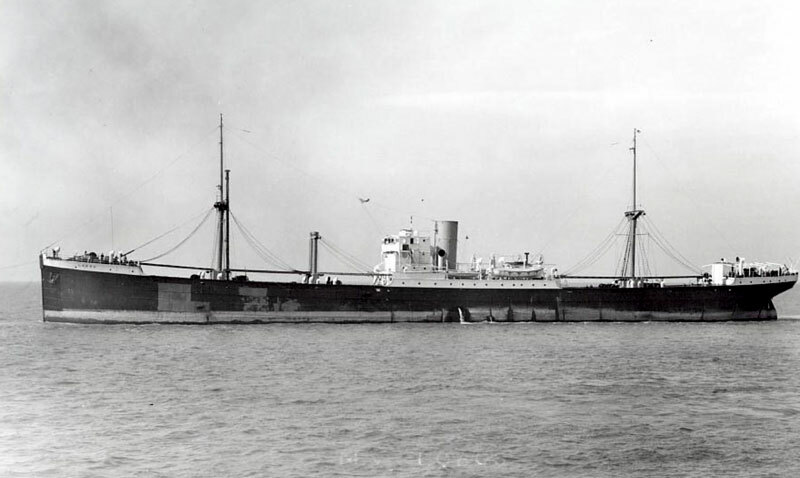
MV Lobos - the PSNC ship that...
In 1917 he had married Grace Lindsay Kerrow, the daughter of a Scottish doctor and nearly ten years his younger. The Vaughans arrived in the Falklands in the passenger ship MV Lobos on 19 July1926.
Vaughan was an active and busy man who soon became fully engaged in all aspects of community life. Grace Vaughan was as equally energetic as her husband. She took on many responsibilities of her own, including those as a Sunday school teacher and leader of the Brownies. She also captained one of the local hockey teams and was a member of the Library and Museum Care committee. Grace Vaughan led the Cathedral Choir and organised the annual Cathedral sale of works.
Immediately on their arrival in the Falklands in1926 the publication of the FI Magazine was revived, with Vaughan as the editor.
Frederick Vaughan dedicated the World War I Cross of Sacrifice in Stanley in November 1926. He was also responsible for some additions inside the Cathedral – namely the wood panelling along the inside walls of the building and the erection of the chancel screen in memory of Bishop Waite STIRLING. He was made an honorary chaplain to the Forces (CF) by the Governor in August 1927 – serving with the FIDF.
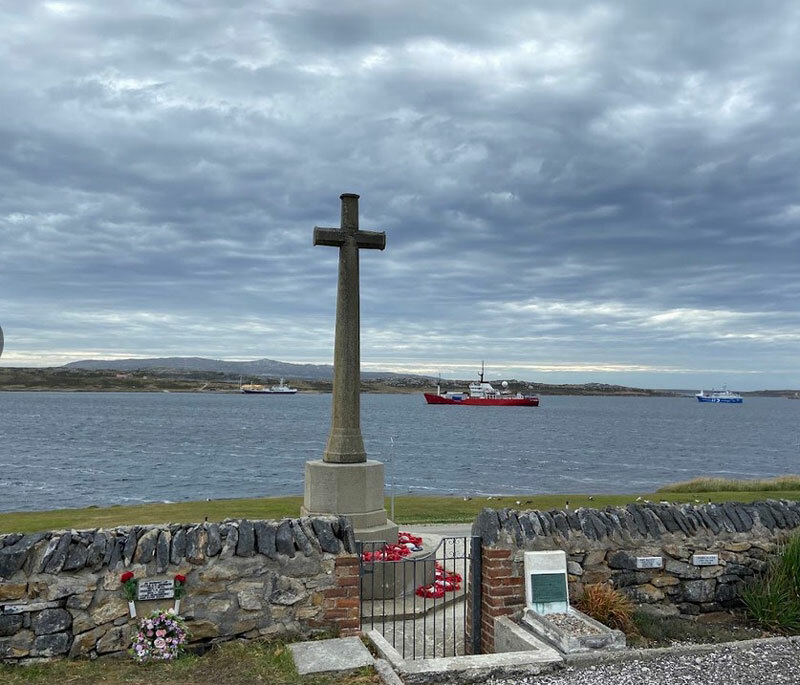
Cross of Sacrifice in Stanley
Governor HODSON’s speech when he opened the 1928 Cathedral Sale of Works, paid tribute to the Vaughans:
We owe a real debt of gratitude to the Very Revd the Dean and to all the Church workers who have toiled so nobly night and day to achieve these results. Led by Mrs. Vaughan, that charming lady with the pleasant smile but iron will, they have accomplished wonders.
The Vaughans only left the Islands once during their tenure of office in March 1929 when they took a holiday in the UK. Frederick wrote in the FI Magazine and Church Paper: ‘While I am,naturally, looking forward eagerly to seeing again relatives and friends at home, I am leaving many here with real regret and I trust that, by the goodness of God, I may be back in Stanley again, about next September.’
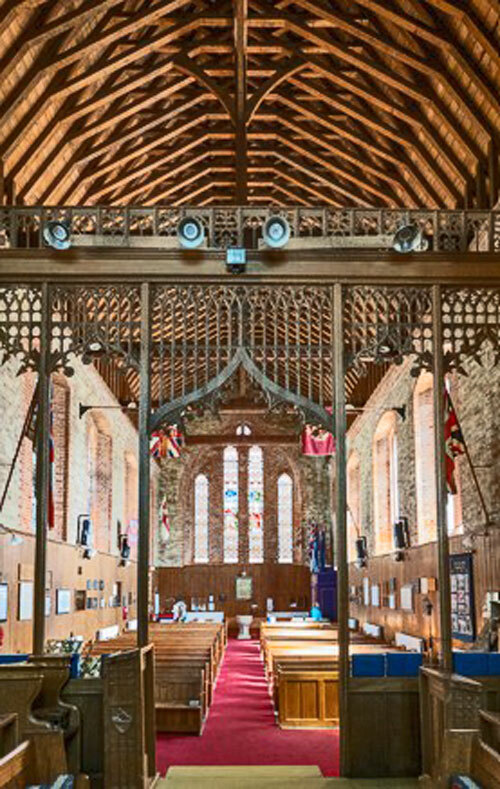
Chancel screen in Christ Church...
The FI Magazine and Church Paper records that:
On the departure of The Very Rev. The Dean and Mrs Vaughan from the Colony, a pleasant surprise awaited Mrs Vaughan on boarding the M.V. Loreto [on 9 March 1929] the Brownies under the Tawny Owl (Miss Bossingham) presented Mrs Vaughan with so many bouquets, that there were quite enough flowers to decorate the ship. The gift was very much appreciated by Mrs Vaughan.The Vaughans returned to the Falklands in the SS Orita on 15 October1929. Vaughan was a ‘no nonsense’, forthright and outspoken man who could sometimes be brusque to the point of rudeness. He was not averse to criticising many institutions and people,including the Governor, in public. Not infrequently he had to make fulsome apologies. Grace Vaughan was universally liked and respected throughout the Colony, but the same could not always be said of the Dean. He was not an easy man to work with as a colleague or as a community leader. The relationship between Vaughan and the assistant chaplain - Alyward - broke down, and Vaughan wrote to the Bishop asking that Alyward be suspended.
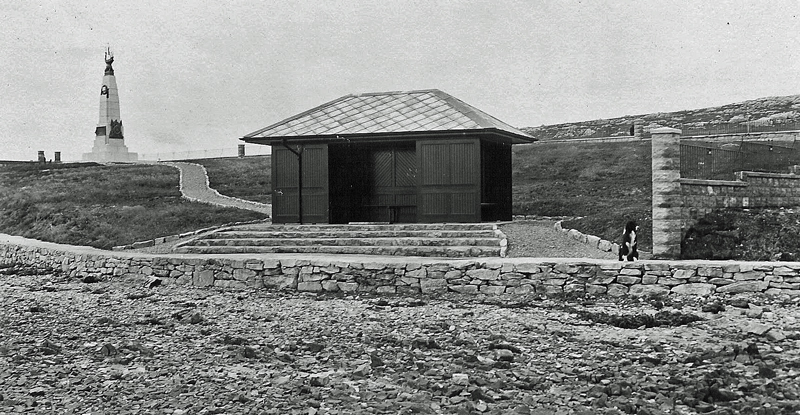
Battle Monument shelter where body of...
In the local newspaper Penguin 10 December 1930, Vaughan announced:
The suspension of the Reverend S Alyward: To prevent any misunderstanding in the matter the Dean and Council of Christ Church Cathedral desire to publish the following, statement: (1) The Rev. Aylward has been suspended by the Lord Bishop from further duty in the Colony because of his unsatisfactory work and conduct - in regard to which many and specific complaints have been received. (2) The Dean and Church Council will not be responsible for any debts incurred by the Rev. Aylward:Bishop Norman de JERSEY, who had previously sponsored, ordained and appointed Aylward to the Falklands, was incensed at the publicity surrounding the suspension. He wrote a highly critical letter (dated 5 March 1931) to Vaughan about his behaviour:
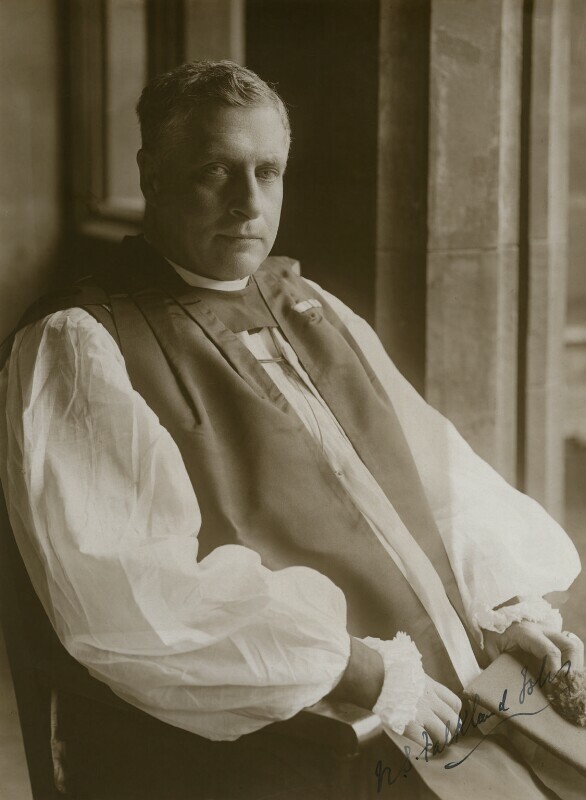
Bishop Norman de Jersey
The whole state of the Church in the Falklands is far from satisfactory … the Alyward episode is pitiable … if only you had been as keen to help him as you were to down him all might still have been well … I never intended that his suspension should go in the Penguin … that you might have done the thing as quietly possible … I wanted to help the poor chap as much as possible …I wrote to his father and mother … [and] you wrote to them … it is the cruellest and most heartless thing I have heard … I fear that you have lost and will never regain the influence and respect that you ought to have …Then you attack the Governor [Arnold Hodson] … you cut very little ice with the people … I have decided that a clean sweep is a necessity … your next leave cannot be far off. I ask you to arrange not to come back … But it is all the more difficult we shall lose your wife whose work and personality has won the affection of all classes of the community … I am more than sorry that I have, in the interests of the church, to take this definite line.
On April 9th, 1931, the Vaughans, together with Captain Carl KIRCHEISS made the shocking discovery of the body of the greatly respected Captain Lauritz CARLSEN, Master of SS Fleurus, near the Shelter in the Battle Memorial enclosure in Stanley after Carlsen’s fatal heart attack.
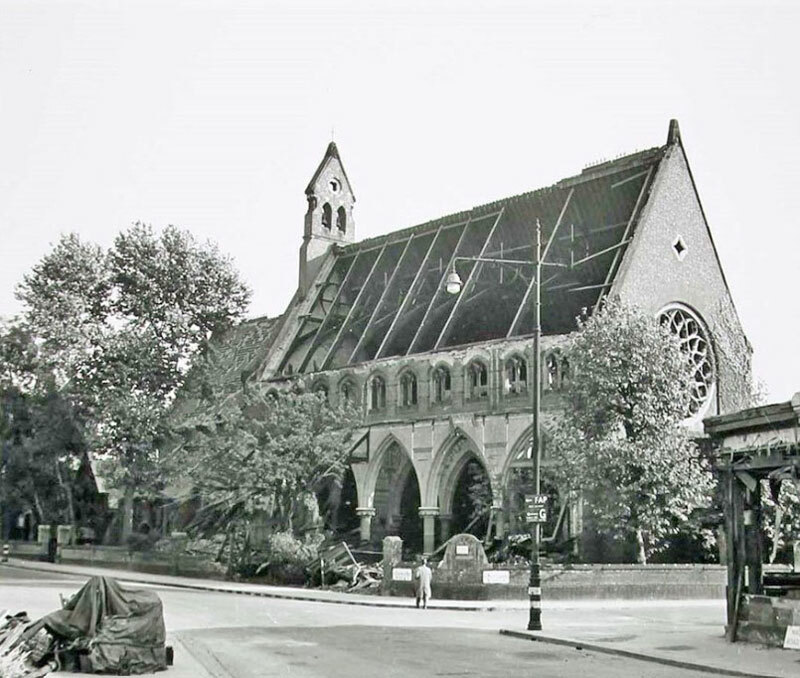
Bombed out Clapton church -...
Vaughan was succeeded as Dean by Rev. Harold Ernest Lumsdale in late 1931.
The Vaughans returned to England, and he became a parish priest in Hackney. He served again a part time Army Chaplain in World War II. He was awarded an OBE in 1942. He was also a Fellow of the Royal Geographical Society (FRGS). Between 1933 and 1945 Vaughan was Vicar of Christ Church Clapton - where he additionally became Rural Dean of Hackney. Christ Church Clapton was a historic Victorian church which was severely bomb damaged on 10 October 1940, during World War II, when a German bomb landed on the north side of the church. (In 1953 the building was later demolished).
Vaughan became the vicar of St. Mary Brookfield, in Camden, London in 1945. A local history of the parish (published in 1975) notes that
:'Vaughan's wealth of experience was quickly put to the test. He was appointed Rural Dean of St Pancras in addition to his parish responsibilities. He had a badly war damaged church, the Parish Hall [had been] completely destroyed and the church finances were in a poor state. The congregation was small and there was no Sunday School. Within twelve months the situation and prospects had become brighter. A Sunday School had started, work put in hand to repair the church, the congregation had increased in size and the financial situation had also improved.'
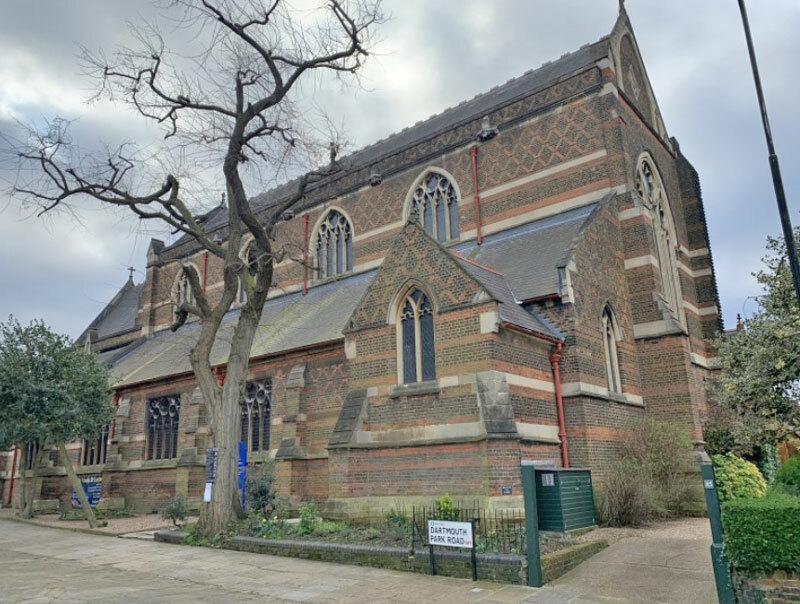
Vaughan's last church - St Mary...
Vaughan retired from full time ministry and as Vicar of Brookfield in 1953
Frederick Vaughan died in Otford, near Sevenoaks, Kent, on 10 June 1963. Grace Vaughan died in Bromley, Kent in 1983.
Comments
Revisions
July 2026 Biography first added to Dictionary