CAMERON, JANE DIANA MARY KEITH
1950-2009 from Falkland Islands
Falkland Islands Government Archivist, was born in Stanley on 12 January 1950 daughter of Norman CAMERON,(1900-1970) manager of Port San Carlos farm and Anne (1914-2002)(daughter of Sir Herbert HENNIKER-HEATON 1880-1961). The eldest of four children, she grew up on the family farm with her brothers ALASTAIR (1951-1989) and Donald (b.1953), and sister, Sukey (b.1956). In 1961 she left the Islands, with her brothers, to continue her education in England. She attended Southover Manor School in Lewes and then went on to study modern history at the University of East Anglia.
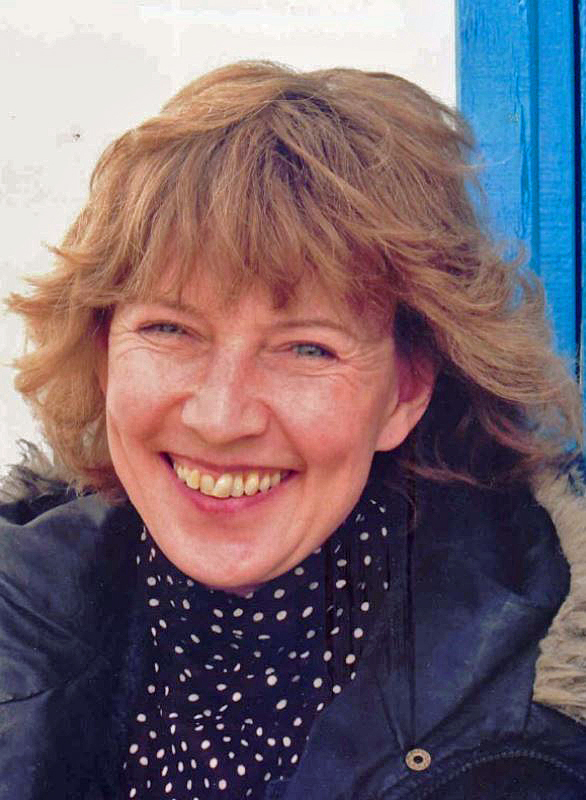
The National Archivist
On graduating, she devoted herself to paper conservation and bookbinding. She was apprenticed to the well-known bookbinder, Sydney Morris Cockerell at Grantchester near Cambridge. Following a four-year apprenticeship, Jane moved to the Conservation Department of the Bodleian Library in Oxford for a further six years.
After Oxford Jane took a break from academic life and spent time working in London at the Hard Rock Café and Pizza Express. When the Argentine invasion of the Islands took place, she joined her brother Alastair and her sister Sukey, working at the Falkland Islands Association Office. Jane returned to the Islands on a visit in 1983 and was very concerned to see the state of the archives, many of which had been damaged during the Conflict. In 1989 she returned permanently and began preservation work on some of the badly damaged material in the Registrar’s Office and the following year she was appointed Government Archivist, the first salaried and full-time person to hold the post. In the ‘Outline Guide to Holdings for the Archives’ Jane described the state of the records as she found them. Papers were heaped in a wooden building near the Public Jetty, where Argentine troops had stayed during the occupation. The records were at serious risk from fire. (Jane’s fear was so great that she regularly woke up in the middle of the night and drove down there just to check everything was still alright!). Meanwhile she set up an archives workshop in a former military portacabin.
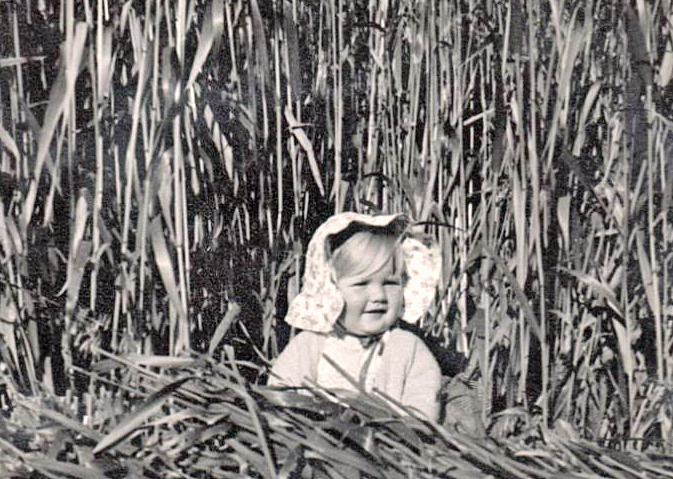
Jane Cameron as a child sitting in a...
In 1998 a purpose-built archives building was completed. In addition to storage facilities and controlled temperature, there was a reading room and a conservation workshop. The total cost (£269,000) was considerable but the fact that Councillors found funds for this project, when there were numerous other priorities, was a tribute to their high opinion of Jane and their confidence in her capability as Government Archivist. With the completion of the Archives Building, it became possible for scholars to work on the 160 years’ worth of records produced by the Falkland Islands Government, and this allowed for a far higher and more detailed level of historical research.
Jane took a strong interest in the care and preservation of historic buildings all over the Islands. The Cape Pembroke Lighthouse was a cause she made her own. With the support of Councillor Norma Edwards, she established the Historic Buildings Committee which set out to preserve buildings and farm infrastructure of historical significance around the Islands.
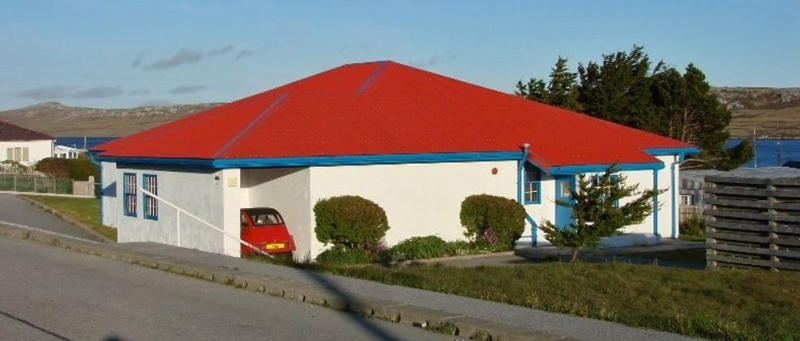
The National Archive building that...
In 1995 Jane joined Rear Admiral Kit Layman (Commander British Forces from 1986-7) in editing a collection of letters for a Victorian ancestor of his – also a naval officer – for a book entitled ‘The Falklands and the Dwarf’ which recounts the voyages of Captain William WISEMAN among the Islands in the 1880s. Jane also contributed to a number of other books, “Corrals and Gauchos” by Joan SPRUCE, “Cooking the Falkland Islands Way” by Tim Simpson, “The Falklands Saga” by Graham Pascoe and Peter Pepper She contributed fourteen of the entries in the “Dictionary of Falklands Biography” complied by David Tatham and “From Diddledee to Wire gates”, a dictionary of Falklands words and expressions which she worked on with Sally Blake and Joan Spruce and which was published after her death.
Jane was exceptionally well travelled; in 1984 she visited St. Helena with her brother Alastair. On a visit to the West Indies in1992, she travelled to Montserrat, Dominica and the Dutch islands of Saba and St. Eustace; at each place she would visit the local archives. In 1997 she visited Tristan de Cunha in an official capacity to help the Islanders with the preservation of their archives and in 1999 she sailed to South Georgia to conduct a survey of the buildings at King Edward Point for the South Georgia Government.
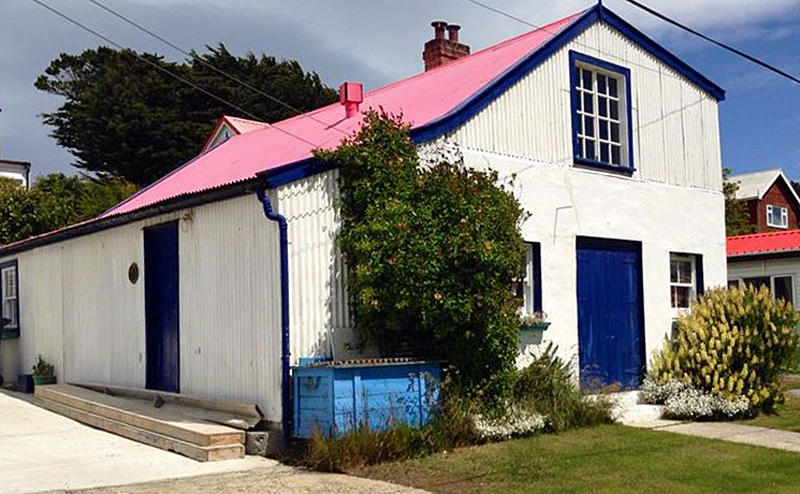
The Old Bakery - Jane's home
In November 2009, Jane was fully established in Stanley. She had a comfortable house – The Old Bakery – on Fitzroy Road where she lived with her partner Rob IJssel. It was furnished in an eccentric and engaging style, thanks to Jane’s appetite for antiques and Rob’s skill as craftsman extra-ordinary. Her red Citroen 2CV was one of the sights of the town. She might have been approaching retirement age, but there was no doubt that she would continue to work on the Falklands’ past for many years yet. When she was offered a voyage as adviser by a Dutch television company making a documentary on Charles DARWIN’s ship HMS Beagle, it seemed an opportunity too good to miss.
Yet it was on a shore trip from that cruise that she was gravely injured in a traffic accident in the Argentine town of Trelew. For over a month family and friends kept a vigil by her bedside and sent e-mail reports to her friends and colleagues all over the world. The tone of the reports gradually shifted from optimistic to non-committal and by mid-December it became clear that Jane might not recover from her many and severe injuries. She died on 26 December 2009 and, after a service of Memorial and Thanksgiving in Stanley Cathedral on 11 January 2010, was buried on 17 January at Port San Carlos, next to her brother Alastair.
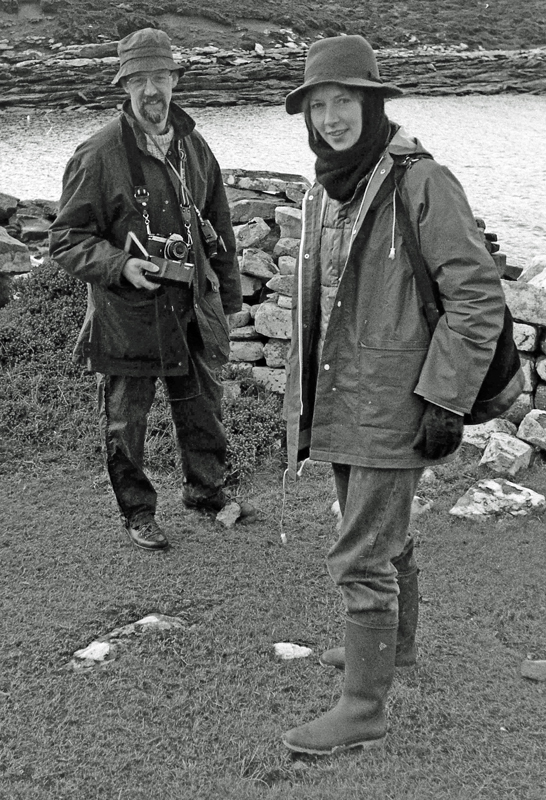
Jane on a field trip to Port Egmont
Jane’s untimely death came as a blow to her friends and family and to a wide circle of historians and research workers all over the world. Her place in the history of the Falklands is secure as the first professional archivist and director of the first purpose-built archives building. In November 2010, the Archives were officially re-named The Jane Cameron National Archives in her memory, making 170 years of the rich official history available to scholars from all over the world and adding much material which Jane herself had collected. In 2008 the Editor wrote in the printed Dictionary of Falklands Biography’s acknowledgements section:
Jane’s knowledge of Falklands history was unmatched and she has been very generous to me and to every other contributor who sought her help. The Dictionary simply could not have been completed without her.
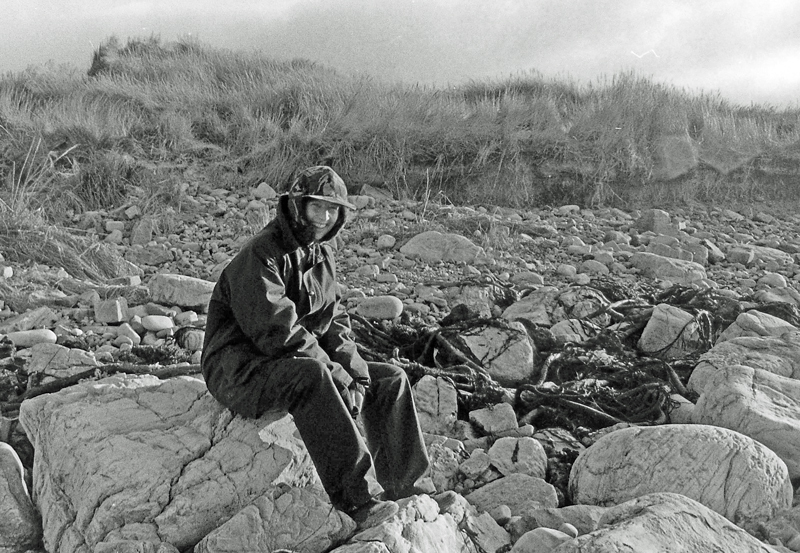
Jane exploring
A local historian pays tribute to Jane:
Jane is one of the few people that I can honestly say changed the course of my life. Thirty five years ago she was the first person to encourage me to research and write about the history of the Falklands. Numerous articles published in the Falkland Islands Journal and a doctoral thesis later, I hope have done justice to her care and support, when she freely nurtured in me a love of the history of the Falklands that she cared so much about.
But when the writer Tony Chater in his memoir described her as “a national treasure” he was not just thinking of her contribution to the Falklands and their history. She was simply a delightful person: in Tony’s words:
Thoughtful, sensitive, enchanting and extremely funny, Jane was blessed with immense charm and a smile that could melt an iceberg. And for those of us who earned her disapproval she was armed with a brief but armour-piecing glare.
Following her death the Alastair Cameron Memorial Trust was expanded to include Jane.
Comments
Revisions
June 2026 Biography first added to Dictionary