BONNER, DONALD (DON) WILLIAM
1927-2015 from Falkland Islands
sailor, chauffeur, race-horse owner, was born in Stanley on 24 November 1927: he was the third son of Henry John (Harry) Bonner (1894-1947) and his wife Christina Catherine McCaskill (Kate) (1899-1968) whose family came from the Isle of Lewis.
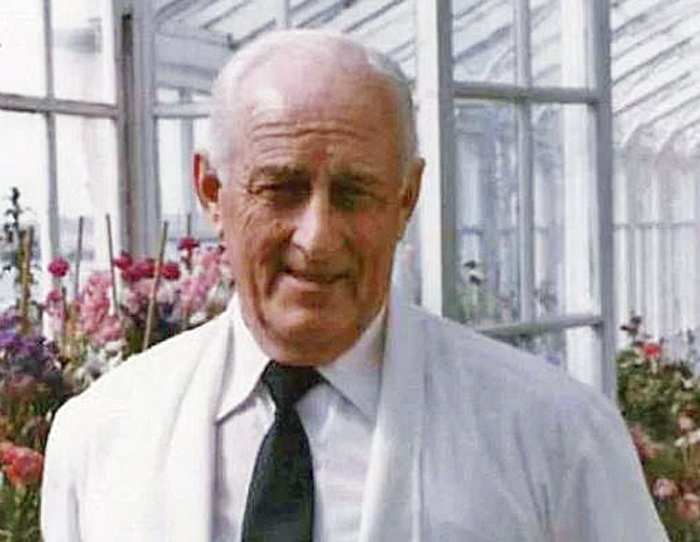
Don Bonner in Government House ...
When World War II broke out, he was sent with his brother Roderick (1930-2007) to North Arm and moved on to Walker Creek after some upsets. He joined the FI Volunteers as soon as he was old enough and in 1943, he boarded a ship bound for England where he had to wait for a year before he was eligible to join the Royal Navy.
Don Bonner joined HMS Europa, usually known as Sparrow's Nest, the Central Depot of the Royal Naval Patrol Service, which was located at Lowestoft, the most easterly point of Great Britain, and then the closest British military establishment to the enemy until it was decommissioned in 1946. Seventy thousand men served in the Patrol Service, and they manned 6,000 small craft of numerous types, including trawlers, whalers, drifters, MFVs (Motor Fishing Vessels), MLs (Motor Launches). The Patrol Service suffered more than 250 lost vessels, more than any other branch of the Royal Navy. Bonner’s service included minesweeping in the English Channel and the Mediterranean.
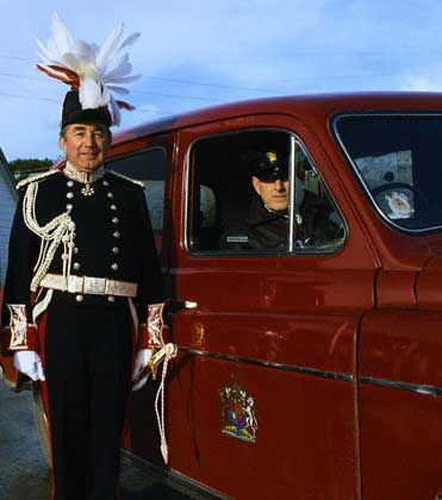
Don Bonner with ir Rex Hunt
After the war he had a number of jobs at sea, but he yearned to return to the Islands. The opportunity came in 1950 when he joined the crew of a former Patrol Service drifter named the Golden Chance which was to sail to the Falklands to be employed in sealing by the Commonwealth Development Corporation venture at Albermarle. (Golden Chance is now a wreck in Stanley Harbour. It was built in Lowestoft in 1914) The small ship was barely sea-worthy. The journey took 63 days and included visits to Lisbon, the Canary Islands, Brazil and Uruguay before reaching the Falklands. It finally reached Stanley after a stormy voyage
Back in the Islands, Bonner worked for the FIC in the West Store, then for the police and then went to South Georgia to work for Salvesen, manning the motorboat which ran between Leith Harbour and Stromness.
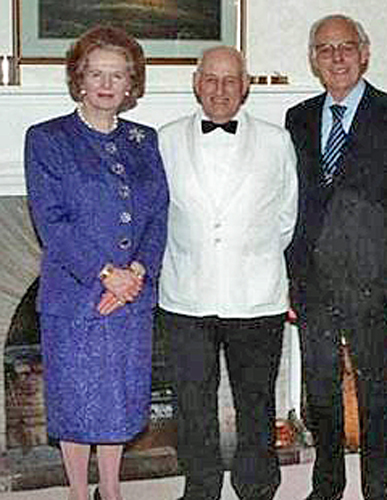
Don with the Thatchers
In February 1952 he married Vera Joan Sadler Smith whose father came from Wiltshire. Their first child Carol was born the following year, to be followed by Simon, Nicky, Jane, Susan, Tim and Joanne.
The family moved to camp where Bonner was employed as a shepherd in a succession of settlements: Lively Island, Arrow Harbour in an outside shepherd’s house, the Chatta and Port Howard. During this time, Bonner established some sporting history when he trained an unpromising sheepdog named ‘Laddie’ to become proficient at controlling five sheep and winning the championship in 1962 and twice in 1963.
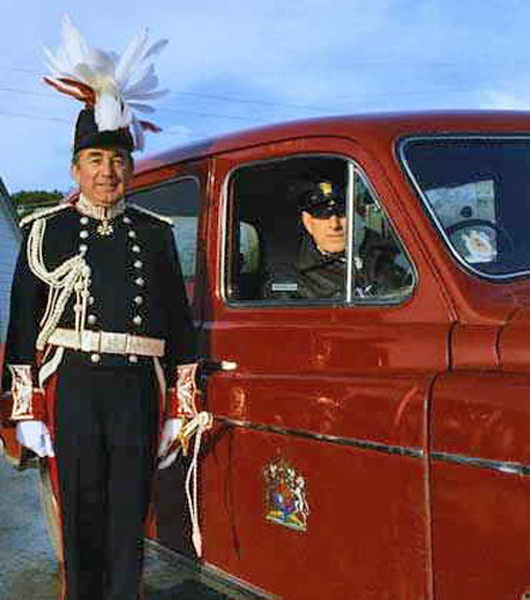
The Governor's taxi
In 1976, Bonner applied for the position of butler and chauffeur to Governor Neville FRENCH and once appointed, changed his lifestyle, giving up smoking and becoming a man of sober habits. He served six governors in all: they were grateful for his advice and his knowledge of the community, as were official visitors to the Islands. He took successive governors on their visits to camp settlements and on fishing trips.
On the night of the Argentine invasion, Bonner sat up with his shotgun ready to help with the defence of Government House, but as tiredness overcame him the Royal Marine commander gently suggested that he should return to his family in their cottage across the road. Later that day he drove Governor HUNT in the official red taxi – both wearing their uniforms - to the airport, deviating - without permission - to the radio station to enable the governor to make his farewell broadcast.
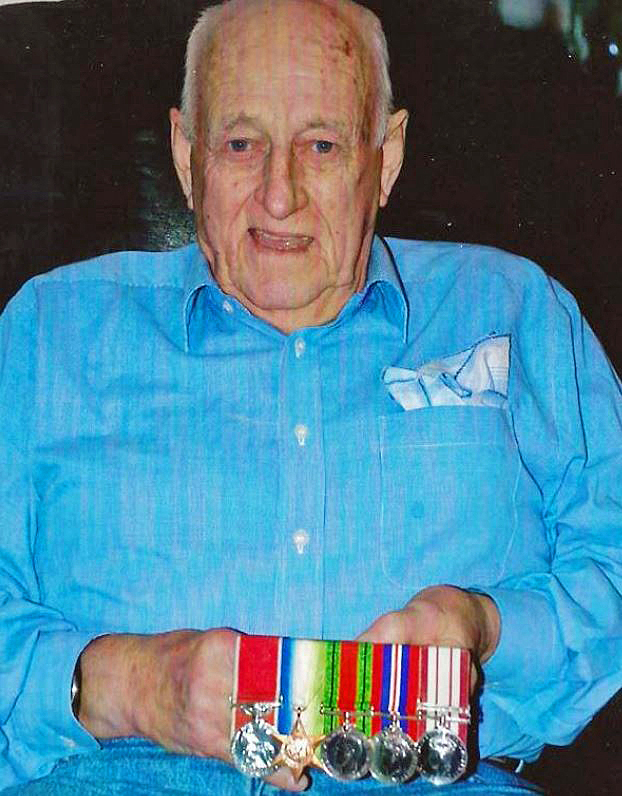
The proud war veteran with his medals...
During the 74 days of occupation, Bonner remained at his post, protecting the possessions of the governor and his wife and ensuring that the civilian staff at GH were treated correctly.
In 1991 he was awarded the British Empire Medal which was presented to him at Government House by the Duke of EDINBURGH during his visit in March 1991. He retired from government service in 1993 but was frequently recalled to assist and advise at official functions.
Retirement brought a new challenge: Bonner travelled to Punta Arenas to purchase Chilean racehorses, primarily for his family to ride at the Christmas sports and other race meetings across the Islands. He carefully hand-picked the mares he wanted, and they brought home the Governor’s Cup on seven occasions – Croacia four times, Florida twice and Dory once. He was given the affectionate nickname of ‘Aga Khan’ and many of the current crop of fine horses in the Islands have been bred from the horses he imported.
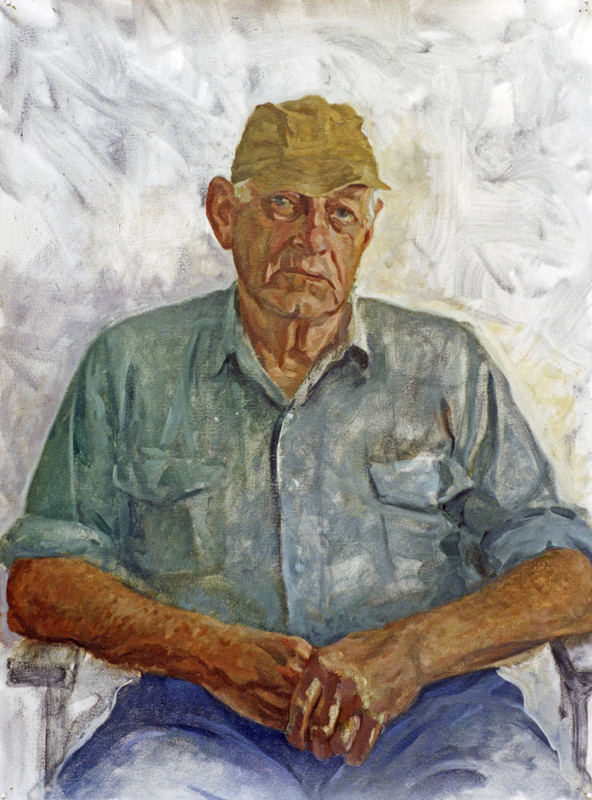
Alan Stones' portrait of Don; painted...
Don Bonner had friends everywhere: his telephone would ring with callers wishing him well; cruise ship passengers would seek him out with messages from friends; veterans would discuss the events of 1982; the younger members of the community would talk to ‘old Don’ in the pub as he drank his can of cola. He was staunchly British, a proud Falkland Islander and a member of the Royal British Legion.
Don Bonner died in Stanley on 16 December 2015. His wife Vera, having brought up a large family in camp, spent the last years of her working life as social secretary in Government House, where her knowledge of the local scene was invaluable to successive governors. She died in 2021.
Comments
Revisions
April 2026 Biography first added to Dictionary